Topic 4: Scratch
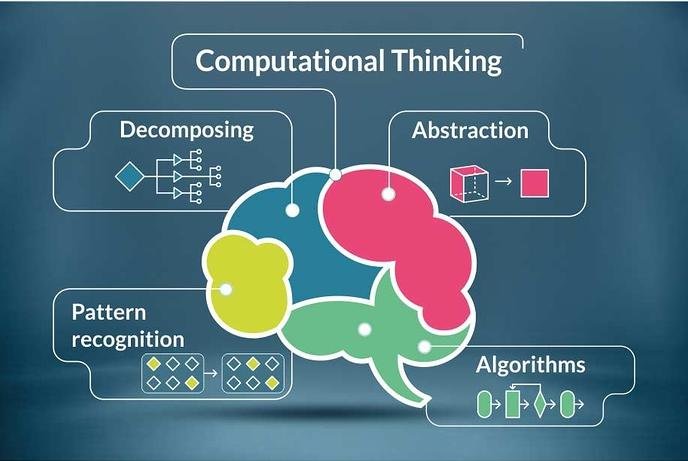
Information and Computer Technologies (ICT) have become an increasingly important development in modern society (Demir, Caka, Yaman, Islamogu, Kuzu, 2018). Computational thinking, is therefore a skill that needs to be instilled in the next generation in order for technologies to keep advancing (Demir et al., 2018). However, computational thinking is not simply a rote skill or computer programming. It is a human conceptual skill that allows us to problem solve, design and create using abstraction, decomposition, algorithmic thinking and data analysis (Chalmers, 2018).
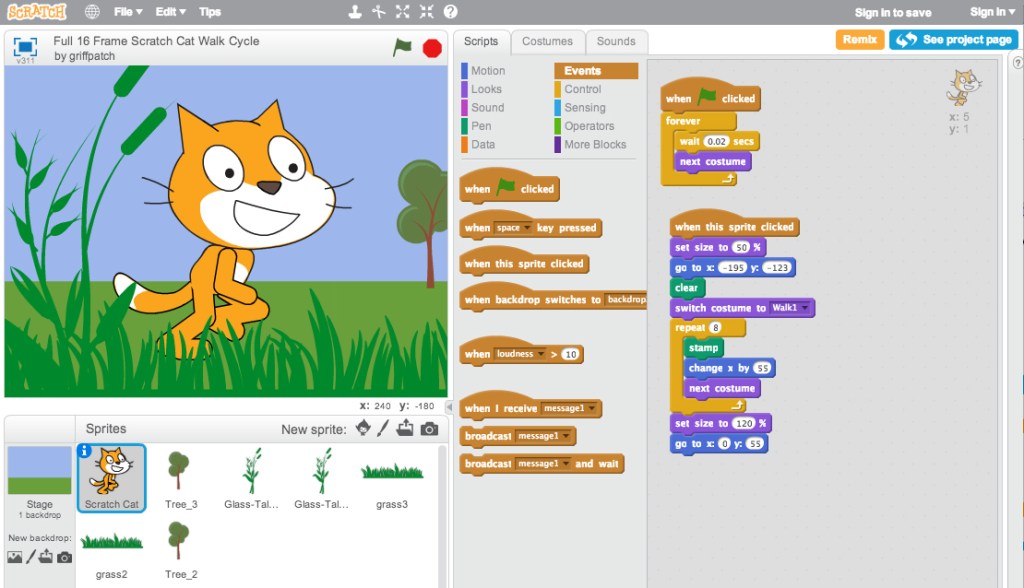
In particular, coding has become a large part of education in recent years and is increasingly used to develop students computational thinking skills (Chalmers, 2018). Scratch, is a programming language created for young people in order to introduce them to the world of coding and allow them to form digital creations (Koh, 2013). It is a building blocks based program that allows students to rearrange commands to create their own scripts, using systematic reasoning and problem solving. (Koh, 2013). This program has the capacity and flexibility to be used in a wide range of key learning areas to foster creativity as well as computational thinking (Koh, 2013). Scratch is considered a visual block-based programming environment for students to scaffold strategies in learning robotics and coding (Weintrop, Hansen, Harlow & Franklin, 2018). Blockly is a program that also falls into this category. According to Seraj, Katterfeldt, Bub, Autexier & Drechsler (2019), compared to Scratch, Blockly has been shown to intrigue interest in coding among students and in particular among females. Blockly is similar to scratch as it introduces students to the components of coding and robotics using the foundational skills of problem solving and creative thinking in order to find a digital solution (Seraj et al., 2019).
In terms of pedagogical implications, Scratch is a program that can increase engagement within a classroom if implemented effectively (Grover, Basu, Bienkowski, Eagle, Diana & Stamper, 2017). However, for computational thinking skills to be deeply fostered, students need to be taught how to move from fiddling with the program, to deeply and productively applying computational thinking skills within the program (Grover et al., 2017). Pedagogically, these skills need to be scaffolded using multiple ‘how’ and ‘what’ strategies (Grover et al., 2017). Once students have the capacity to use the program effectively, they are then able to foster deep creative thinking and problem solving within computer technology using their computational thinking (Grover et al., 2017).
References:
Chalmers, C. (2018). Robotics and computational thinking in primary school, International Journal of Child-Computer Interaction, 17, 93-100.
Demir, K., Caka, C., Yaman, N. D., Islamoglu, H. & Kuzu, A. (2018). Examining the Current Definitions of Computational Thinking. In Teaching Computational Thinking in Primary Education, 36-64. Hershey, PA: IGI Global.
Grover, S., Basu, S., Bienkowski, M., Eagle, M., Diana, N. & Stamper, J. (2017). A Framework for Using Hypothesis-Driven Approaches to Support Data-Driven Learning Analytics in Measuring Computational Thinking in Block-Based Programming Environments, ACM Transactions on Computing Education, 17(3), 1-25.
Koh, K. (2013). Adolescents’ Information-Creating Behavior Embedded in Digital Media Practice Using Scratch, Journal of the American Society for Information Science and Technology, 64(9),1826–1841.
Seraj, M., Katterfeldt, E. S., Bub, K., Autexier, S. & Drechsler, R. (2019). Scratch and Google Blockly: How Girls’ Programming Skills and Attitudes are Influenced, Proceedings of the 19th Koli Calling International Conference on Computing Education Research, 23, 1-10.
Weintrop, D., Hansen, A. K., Harlow, D. B. & Franklin, D. (2018). Starting from Scratch: Outcomes of Early Computer Science Learning Experiences and Implications for What Comes Next, International Computing Education Research Conference, 142-150.


Hi Georgia, this is a great read and really outlines how scratch and programming on a larger scale can be used to foster creativity in the classroom and also how through the use of similar programs develop skills that ultimately translate to important 21st century skills. Furthermore I’m glad you have used many different sources for your blog its great to see that the information is based of solid research.
LikeLiked by 1 person
Thanks so much for the positive feedback!
LikeLike
Hi Georgia,
Thank you for your blog! It was an interesting read as you analysed it in terms of computational thinking (instead of Digital Games and Design, like I did)! I wholeheartedly agree that students must be explicitly taught how to use the program before deep and meaningful learning and computational thinking can occur.
My comment will be short and sweet because you covered most of the information in your blog! But I am curious to know, did you find any limitations to the program and if so what were they?
Thank you again,
Natasha
LikeLike