Topic 5: BeeBots
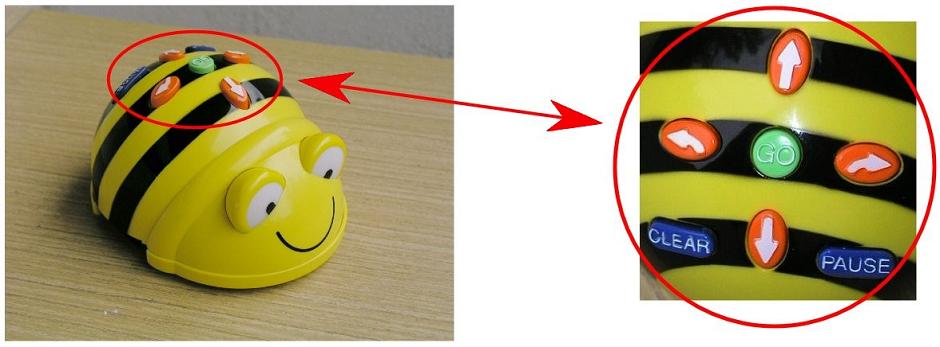
Robotics is a digital technology that allows students to foster their creativity through hands-on problem solving applications (Chalmers, 2018). Robotics allows students to utilise and further develop their computational thinking skills through authentic learning activities (Chalmers, 2018). Beebots are a type of floor robot that can be digitally programmed with 40 steps using 6 different commands (Attard, 2012). It can be utilised in primary classrooms to enhance STEM learning as well as literacy learning and various other KLAs (Hunsaker, 2018). Utilising Beebots in the classroom aligns with the constructivist approach to teaching and holistic learning (Highfield, 2015).
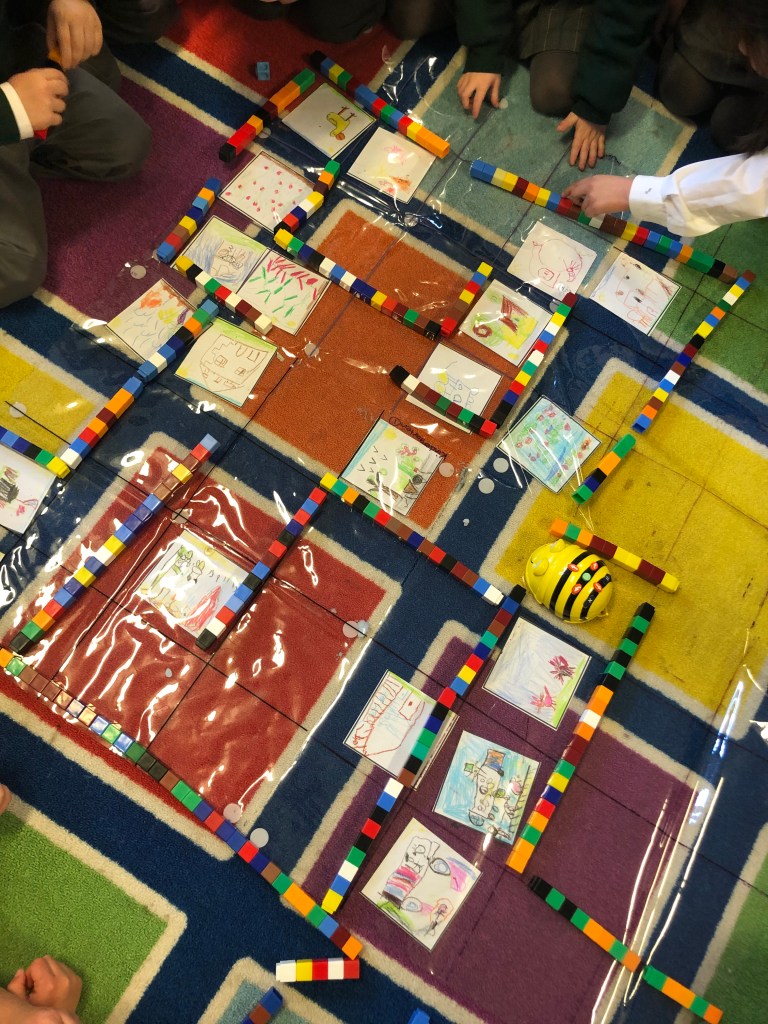
Moreover, the development of 21st century skills is a key learning approach in many curriculums (Highfield, 2015). In particular, Beebots are most effective in promoting collaborative learning, problem solving and creative thinking among students (Hunsaker, 2018). Having a tangible interface for students to experiment with allows their digital learning to become more authentic and engaging, therefore creating a significant effect on students creative thinking (Highfield, 2015). For example, spatial reasoning and position in numeracy can be taught using Beebots. Constructing a maze that students need to navigate their Beebot through requires students to use their decomposition skills and creative thinking (Hunsaker, 2018). They also allow students to collaborate with one another and take on specific roles so they can navigate their Beebot through the maze. The teachers responsibility during these types of activities is to be a support for the students in order for them to reflect on their mistakes, problem solve and experiment on their own (Hunsaker, 2018). These types of activities are made to foster creativity as students are given a number of limitations and left to problem solve their way to a unique solution (Highfield, 2015). Beebots can be used for a variety of teaching opportunities that ultimately foster students creativity and motivate them to explore boundaries.

A similar technology to Beebots is WeDo 2.0 by Lego. These robotics kits are different from Beebots as they allow the students to build their own robots and program them according to the needs of the assigned task (Chalmers, 2018). WeDo 2.0 is targeted at stage 3 and above whereas Beebots provide flexibility and can be utilised from Kindergarten to year 6 (Chalmers, 2018; Hunsaker, 2018). WeDo 2.0 is beneficial for advancing students robotics skills whilst still keeping them engaged in learning (Chalmers, 2018). WeDo 2.0 fosters creativity as it provides less limitations but requires students to imagine and design their robots before actual construction can begin and software development can commence. Both robots however foster problem solving and creative thinking in different ways and are both positive additions to a classroom teaching program.
References
Attard, C. (2012). Teaching with technology, Australian Primary Mathematics Classroom, 17(2), 31-32.
Chalmers, C. (2018). Robotics and computational thinking in primary school, International Journal of Child-Computer Interaction, 17, 93-100.
Highfield, K. (2015). Stepping into STEM with young children: Simple robotics and programming as catalysts for early learning. In C. Donohue (Ed.), Technology and digital media in the early years: Tools for teaching and learning, 150–161, New York, NY: Routledge.
Hunsaker, E. (2018) Bee-Bot: A guide for parents and educators, Department of Instructional Psychology & Technology, 1-15.


Hi again Georgia,
BeeBots seem like an excellent hand-on tool for problem-solving. Reading your blog, it does make sense that Robotics is an excellent way to further develop CT skills. I agree STEM is where it is most likely to see BeeBots but would love to see them used in other KLAs. I like how you compared BeeBots to Lego WeDo 2.0 as they are a great tool to help foster creativity according to the task design.
LikeLiked by 1 person
Yeah i’ve used Beebots during practical learning and they’re super engaging!
LikeLike
Hi Georgia,
I agree with your statements of how powerful BeeBots can be in the classroom in assisting students computational thinking skills and how relevant they robotics can be to enhance STEM learning skills. You show a great understanding in discussing how BeeBot can help develop a particular teaching pedagogy in the classroom and how this may further develop students creativity. Additionally, by comparing BeeBots to Lego WeDo 2.0 in terms of their differing levels of fostering creativity was very insightful and will be used to assist many future teachers I’m sure.
Thank you for a great read!
LikeLiked by 1 person
Thanks so much for the positive feedback!
LikeLike
Hi Georgia, robotics is a great way to foster and promote 21st century competencies. They hit all three domains of learning and innovation skills; information, media and technology skills; and life and career skills. Robots introduced at such a young age, such as BeeBots not only prepares students for future learning but for life after school as well.
LikeLiked by 1 person
I couldn’t agree more!
LikeLike